Hydraulic Rock Breaker Innovation, Safety & Future Trends
Introduction
Hydraulic rock breakers remain at the heart of modern mining, quarrying, demolition, and infrastructure development. As global construction intensifies and project timelines tighten, industries demand tools that operate cleaner, faster, safer, and smarter. Hydraulic breakers once seen as simple high impact attachments are now evolving into intelligent, energy efficient, sensor-driven systems capable of communicating real-time performance data, preventing breakdowns, and improving operational safety.
These advancements are not accidental. They are the result of continuous engineering improvements, technological adoption, environmental regulations, and feedback from real-world job sites. Whether integrated into mining fleets, tunneling equipment, or civil infrastructure operations, hydraulic breakers are entering a transformative era shaped by IoT, AI-based diagnostics, advanced materials, and sustainability focused innovation.
Professionals working with a hydraulic breaker manufacturer, relying on a trusted hydraulic breaker supplier, or sourcing globally through a hydraulic breaker exporter must understand these trends to make informed decisions for future-ready operations. This article explores innovation, safety, performance efficiency, and upcoming breakthroughs shaping the next generation of hydraulic rock breakers.
Hydraulic Rock Breakers and Smart Technology: IoT Sensors and Industry Transformation
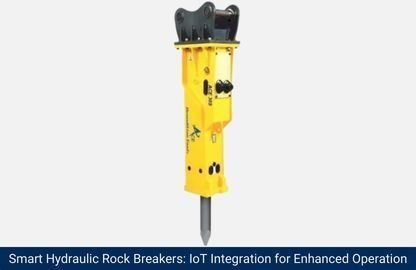
Digital intelligence is redefining how hydraulic breakers operate and how maintenance is performed. Today’s units are no longer blind, high energy tools they are connected machines capable of monitoring themselves and reporting their own health.
Hydraulic Rock Breakers Integrating IoT Sensors for Smart Operation
IoT sensors integrated into hydraulic breakers can monitor:
- Impact frequency
- Blow energy variation
- Oil temperature and pressure
- Vibrations and shock load
- Nitrogen gas levels
- Idle striking events
- Breaker overheating occurrence
These data points allow operators to adjust performance in real time, improving safety and reducing chisel wear.
Real-Time Alerts in Hydraulic Breakers
IoT-driven systems can:
- Notify operators of incorrect working angles
- Alert when lubrication is required
- Detect abnormal overheating
- Identify misuse or overloading
- Recommend immediate shutdown when damage is imminent
This transforms a hydraulic breaker into a self-protecting tool.
Hydraulic Breakers Fleet Insights
Large mining or infrastructure fleets can track all units simultaneously:
- Breaker utilization rate
- Energy efficiency per machine
- Idle time waste analysis
- Predictive wear forecast
Fleet managers gain visibility into how each breaker is performing, helping them compare data across models, carriers, and operations.
Why It Matters
For companies sourcing equipment from a hydraulic breaker manufacturer or purchasing through a hydraulic breaker exporter, IoT aligns heavy machinery with Industry 4.0 principles—transforming productivity and lowering operational risk.
Hydraulic Breakers and Low-Noise Technology for Urban Environmental Compliance
Urban construction requires strict noise regulations, especially near residential clusters, hospitals, schools, and government buildings. Hydraulic breakers have traditionally been one of the noisiest attachments on job sites, but innovation is changing that.
Hydraulic Breaker Noise-Reduction Technologies
Modern hydraulic breakers incorporate:
- Sound-dampening housings
- Enclosed noise-suppression frames
- Vibration-isolated components
- Low-recoil dampers
- Pressure-balanced systems
These engineering advancements significantly reduce decibel levels without compromising impact energy.
Benefits of Low-Noise Hydraulic Breakers
- Reduced community complaints
- Compliance with city noise norms
- Safer working conditions for operators
- Lower operator fatigue
- Improved jobsite comfort and productivity
Real-World Application of Hydraulic Breakers
Projects in metro rail tunnels, bridge repairs, urban road redevelopment, and utility trenching now require low-noise hydraulic breakers as a prerequisite.
Contractors sourcing equipment from a hydraulic breaker supplier must ensure the tools comply with evolving municipal guidelines especially in dense urban environments.
Hydraulic Breakers and Energy Efficiency: Reducing Fuel Consumption and Emissions
Fuel consumption and carbon emissions are major factors affecting cost, sustainability, and global compliance. Hydraulic breakers play a direct role in both, as their performance influences excavator load, hydraulic pump workload, and jobsite cycle times.
How Modern Hydraulic Rock Breakers Improve Energy Efficiency
- Optimized Impact Mechanisms Reduce wasted energy and deliver more force per blow.
- Anti-Idle Striking Systems Prevent energy waste caused by striking without load.
- Automatic Stroke Adjustment Adapts stroke length based on material hardness.
- Hydraulic Flow Optimization Minimizes pump strain and reduces carrier energy demand.
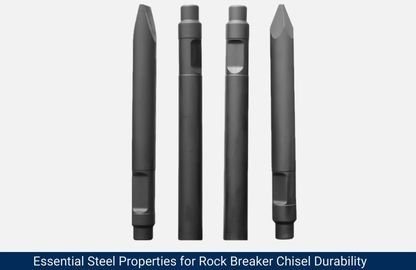
- Advanced Chisel Geometry Enhances penetration, lowers blow count, and reduces breaking time.
- Friction Reduction Technology Smooth internal movement decreases heat generation and fuel waste.
Environmental Benefits Using Hydraulic Breaker
- Lower CO₂ emissions
- Reduced noise pollution
- Cooler hydraulic system temperatures
- Longer machine life
- Reduced total cost per cubic meter of rock broken
Industry Pressure for Cleaner Excavator Breaker
Global carbon policies are influencing how contractors choose equipment. Working closely with a hydraulic breaker manufacturer ensures access to models engineered for today’s environmental standards.
Hydraulic Rock Breakers and AI Based Predictive Maintenance for Maximum Uptime
AI is reshaping how hydraulic breakers are monitored and maintained. Instead of reacting to failures, AI allows operators to forecast potential breakdowns before they occur.
How AI Based Hydraulic Breaker Improves Maintenance
AI systems analyze:
- Sensor data patterns
- Impact consistency
- Chisel wear rate
- Bushing degradation
- Hydraulic pressure fluctuations
- Temperature spikes
- Idle vs loaded striking ratio
Using this data, AI can:
- Predict chisel replacement timing
- Identify early signs of piston wear
- Recommend lubrication intervals
- Warn about improper operating angles
- Evaluate operator performance
Predictive Maintenance = Maximum Uptime
Hydraulic breakers traditionally suffer from sudden downtime due to:
- Seal failures
- Chisel misalignment
- Overheating
- Piston scoring
- Nitrogen chamber leaks
- Bushing wear
AI minimizes these issues, increasing overall machine uptime and reducing service interruptions.
Hydraulic Breaker Integration with Mobile Apps
Modern systems allow operators to:
- View real-time breaker health
- Receive alerts directly on mobile
- Access usage history
- Download performance logs for audits
Contractors procuring equipment through a hydraulic breaker exporter can now make data-driven decisions, ensuring better long-term asset health.
Hydraulic Breakers Future Tools: Advanced Materials, Automation & Sustainability
Next-generation hydraulic breakers are being shaped by new materials, manufacturing advancements, and automation technologies.
Advanced Materials Used in Breakers
- Nanostructured Alloy Steel Enhances core toughness and impact resistance.
- Carbide-Enhanced Components Reduce wear on internal moving parts.
- Anti-Friction Coatings Improve heat dissipation and reduce internal stress.
- High-Tensile Polymer Isolation Blocks Lower vibration transfer to carriers and operators.
Hydraulic Breaker Automation and Semi-Autonomous Operation
Emerging features include:
- Breakers that automatically adjust blow speed
- Auto-stop systems preventing misuse
- Load-sensing breakers that adapt to material hardness
- Smart control valves for consistent energy delivery

In high-efficiency mining operations, autonomous or remote-controlled breakers are expected to become mainstream.
Hydraulic Breakers Engineering for Sustainability
Manufacturers are focusing on:
- Lower steel consumption
- Longer tool lifespan
- Lower noise impact
- Higher fuel efficiency
- Recyclable components
This aligns hydraulic breakers with global sustainability goals—critical for large infrastructure projects seeking compliance certifications.
Hydraulic Breakers Navigating the Global Supply Chain
Working with a reputable hydraulic breaker supplier ensures access to certified, international-standard breakers that meet upcoming regulations in Europe, the Middle East, Australia, India, and Africa.
Conclusion
Hydraulic rock breakers are undergoing a significant transformation driven by smart technology, sustainable engineering, advanced materials, and AI-based maintenance. These innovations are not merely optional features—they are becoming essential for meeting modern safety standards, environmental regulations, operational targets, and project timelines.
Future-ready contractors, mining companies, and infrastructure developers must understand how IoT sensors, low-noise systems, energy-efficient designs, and predictive maintenance are reshaping hydraulic breaker performance. Whether working with a hydraulic breaker manufacturer, procuring from a strategic hydraulic breaker supplier, or sourcing globally through a hydraulic breaker exporter, the key is to align equipment selection with evolving industry expectations.
The future of hydraulic breaking is intelligent, efficient, low-emission, and deeply integrated with technology and those who invest in these innovations today will lead the productivity benchmarks of tomorrow.