
Introduction
Brazil’s mining and quarrying regions differ in rock formations, climate, site access and operating scale. Pick hammers break material by impact, while pneumatic rock drills in Brazil create holes for blasting, bench development and underground headings. Matching each tool to local geology, compressed air capacity and service access determines how well pneumatic mining tools in Brazil perform. Surface and underground sites also set different limits on space, ventilation and hose routing. Rainfall, humidity, dust and remote logistics add maintenance demands that vary by region, so application-based selection backed by confirmed technical data is essential.
Pneumatic Mining Tools in Brazil: How They Fit Regional Conditions
Mining and quarrying across Minas Gerais, Pará, Goiás, Bahia, Espírito Santo, São Paulo and Paraná involve different rock formations, access conditions and production requirements, so equipment should be chosen for the site and not for the region name alone. Handheld pneumatic tools suit lighter-duty tasks, and ACE Pneumatics notes that hydraulic rock drills are better suited to tougher quarrying. A pick hammer for mining in Brazil may support scaling, trimming and localized reduction. Choosing rock drilling equipment in Brazil and quarry drilling tools for Brazilian operations starts with the rock, hole size, working position and air supply on the specific site, and each section below addresses a different planning question.
Pick Hammer or Pneumatic Rock Drill: Breaking Versus Drilling
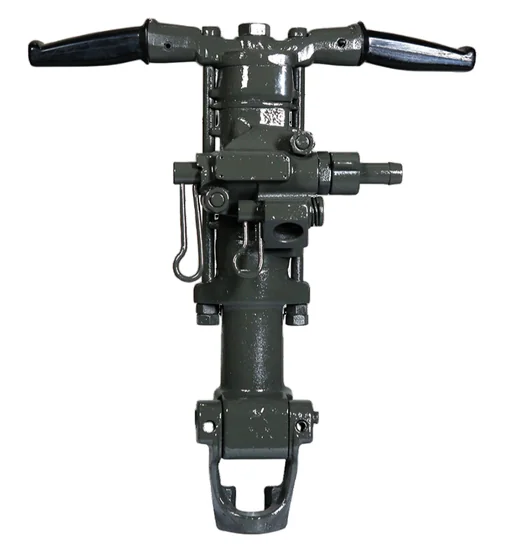
A pick hammer delivers impact through a chisel, moil or spade to break rock, concrete or compacted material. ACE Pneumatics lists its pick hammers as D handle tools weighing 5.5 kg to 13.5 kg, best suited to horizontal work. A pneumatic rock drill combines percussion and rotation to make holes with drill steel and a bit, and ACE lists its rock drills at roughly 10 kg to 28 kg. The two are not interchangeable. Names such as pneumatic rock breaker and pneumatic rock hammer describe impact tools, not drills, and their weight and duty differ from a pick hammer. Controlled material removal and secondary rock reduction are breaking tasks, while blast hole and plug hole preparation are drilling tasks.
Rock Drilling Equipment in Brazil: Regional Requirements at a Glance
Requirements should be assessed by state, mining district, rock, surface or underground setting and site access, because a tool that suits a road accessible quarry near a large city may be poorly matched to a remote pit or a narrow heading. The table shows the main planning question for each region discussed below, and each contractor should confirm the conditions at the actual site.
| State or Region | Situation to Assess | Potential Tool Requirement | Regional Consideration |
|---|---|---|---|
| Minas Gerais | Steep benches and underground headings | Drilling and controlled breaking | Terrain, access and hose routing |
| Pará and Carajás | Remote surface operations | Bench drilling and maintenance | Humidity, rainfall and service distance |
| Goiás | Ground changing with depth | Drilling and secondary breaking | Weathered cover over fresh rock |
| Bahia | Abrasive rock | Development drilling | Tooling wear |
| Espírito Santo | Ornamental stone quarries | Controlled drilling and material removal | Stone damage prevention |
| Urban quarry markets | Quarries near São Paulo and Curitiba | Quarry drilling and rock reduction | Scheduling, proximity and dust |
Pick Hammer for Mining in Minas Gerais: Access and Underground Headings
Contractors in Minas Gerais working on steep benches or in underground headings should treat access as the first selection issue. A tool that one operator can carry to the working face, such as a pick hammer within ACE’s listed 5.5 kg to 13.5 kg range, avoids the positioning that larger machines need. Hose runs from the compressor must still follow the terrain, and every extra length reduces the air available at the tool. ACE describes its jackleg drills as mounted rock drills suited to small cross section drifts, tunnels and underground mining. In such headings, space, ventilation and operator movement decide which tool weight is practical, and hose routing should be planned before equipment arrives so that hoses do not cross travel ways or snag on supports.
Pneumatic Rock Drills in Pará and Carajás: Humidity, Remoteness and Service
Handheld pneumatic tools are mainly relevant around restricted bench edges and fixed processing equipment where production rigs cannot operate conveniently. Pará and the Carajás region combine rainfall and humidity with remote sites and long supply routes. A rock drill that fails far from a service centre stays idle until parts arrive, so lead times, technical documents and a local repair route should be settled before purchase. ACE Pneumatics lists spare parts for its rock drills, including pistons, front heads, valves, rifle bars, sleeves, tappets, chuck bushings and nuts. High ambient humidity can increase moisture accumulation in the compressed air system, making receiver drainage, filtration and air line maintenance especially important.
Rock Drilling Equipment in Goiás and Bahia: Weathered Ground and Abrasive Rock
Where ground in Goiás changes from weathered material to fresh rock with depth, drilling conditions change too, and steel, bit and drill selection should be reviewed as the material changes. A drill that performs well in softer ground may struggle in fresh rock, so contractors should record what each hole encounters and adjust tooling early.
In Bahia, abrasive rock accelerates bit and steel wear, so tooling life and inspection frequency drive operating cost. ACE lists integral drill rods, tapered rods, extension rods and tapered button bits, and its technical guidance states that rock drill productivity depends on correct drilling parameters, bit maintenance and air flow. Sites with abrasive formations should therefore budget for consumables and plan regular bit checks.
Quarry Drilling Tools for Espírito Santo Ornamental Stone
Ornamental stone quarrying in Espírito Santo depends on avoiding damage to blocks, so pneumatic tools play a supporting role. ACE describes the RD 32 for vertical and plug hole drilling, and its pick hammer chisels are listed for fragmentation of blocks in quarries, which suits breaking oversize pieces. Block extraction itself demands controlled cutting methods, and these tools are not precision extraction equipment. Careful handling, correct chisel selection and regular checks limit stone damage and uneven wear, and operators should be trained to work within the limits of each tool.
Quarry Drilling Tools for Brazilian Operations Near São Paulo and Curitiba
Quarries serving large cities work to tight production schedules, so tool availability and quick repair matter as much as drilling capability. Nearby development also raises the importance of dust control and operator protection, since dust affects both workers and surrounding areas. ACE lists the RD 658 for quarry drilling, bench drilling and drilling secondary holes for blasting, which are the tasks most relevant to this setting. Contractors should keep spare parts and consumables on site and plan maintenance around the production schedule, not around breakdowns.
Selecting a Pick Hammer for Brazilian Mining and Quarrying
ACE Pneumatics describes its pick hammers as D-handle tools used in mining, tunnels, trenching and demolition. Brazilian contractors evaluating a pneumatic pick hammer should compare tool weight, working position, material resistance, impact requirements, chisel compatibility and compressed air capacity. The heavier ACE K 13 may suit more demanding breaking work where its operating specifications match the application, while the ACE TPB 7 is a 31 kg breaker class tool. Moil, narrow and wide chisels are available, with shank sizes that differ by model, for example 26 by 70 mm round shank for the ACE K 13, so chisel compatibility should be confirmed for each tool.
Selecting Pneumatic Rock Drills in Brazil
ACE Pneumatics lists the RD 658 for quarry work, blast hole drilling, tunnelling and bench drilling in granite and hard-faced rock. With H22 integral or extension steel, it drills up to 6 m at hole diameters of 27 to 40 mm. The RD 12D is a D-handle drill for horizontal drilling, plug holes and concrete, and the RD 12T is designed for vertical drilling up to 3 m in soft to medium hard rock. The RD 330 dry or wet jackleg is a water-flushed, pusher-leg-mounted drill for underground work. Hole diameter and depth decide the steel and bit, and the steel decides which drill is compatible.
Compressed Air and Tool Compatibility for Pneumatic Mining Tools
Every region depends on the air supply. Confirm the following before ordering:
- Location: state, municipality and site access
- Operation: mine, quarry or tunnel, surface or underground
- Rock: hardness, abrasiveness and fracture behaviour
- Function: drilling or breaking, with hole size and depth
- Air: working pressure, consumption, compressor capacity, hose length and diameter
- Tooling: drill steel, bit or chisel compatibility
- Support: maintenance resources and spare parts availability
Maintenance and Spare Parts for Pneumatic Rock Drills and Pick Hammers
Maintenance routines decide whether a suitable tool stays productive.
- Air quality: fit filtration upstream, drain receivers at shift start and use a line lubricator, which ACE Pneumatics lists among its accessories.
- Inspection: check hoses, couplings, drill steel, bits and chisels for wear and damage each shift.
- Storage: keep tools clean, capped, covered and off the ground.
- Spares: hold pistons, valves, front heads and bushings for each model in use, and record operating hours to time replacement.
- Remote support: standardise on few models, keep technical documents on site and agree replenishment schedules with the supplier.
Pick Hammer Manufacturers, Exporters and Suppliers for Brazilian Operations
ACE Pneumatics Pvt. Ltd. manufactures and exports tools for construction, mining and demolition applications, including pick hammers, pneumatic rock drills, chisels, drill rods, button bits and spare parts. For breaking work, its pick hammer range runs from lighter D-handle models to the heavier ACE K 13 at 13.3 kg and the ACE TPB 7 breaker-class tool. For drilling, the range runs from the lightweight ACE RD 12D at 9.8 kg to the ACE RD 658 at 25 kg, with jackleg drills for underground work. Experienced pick hammer manufacturers, exporters and suppliers should review the site application before recommending a model. Brazilian buyers can support accurate selection by sharing their rock conditions, working position, compressor capacity, tooling needs and expected operating intensity.
Pick Hammers and Pneumatic Rock Drills for Brazil: Choosing by Application
Brazil’s mining and quarrying requirements vary by state, municipality, geology, operation type, climate, air supply and service access, and no single tool suits every combination. Buyers should select equipment based on the verified application and local operating conditions, and should confirm technical values such as weight, air consumption and tooling compatibility with the manufacturer before ordering. Readers who wish to discuss suitable pick hammers, pneumatic rock drills, accessories and spare parts can contact ACE Pneumatics with their application details.
Ready to source pick hammer?
Tell us your quantity and destination. We send specs, pricing and lead time within 1 business day.

Dilawar Sayyad
Global Business Manager, Ace Pneumatics Pvt. Ltd.
15+ years in international business development, helping importers, dealers and contractors source durable construction, demolition and mining tools.